
Blog / Crain Hyundai of Little Rock

Wait Until You See the Hyundai CRATER Concept: Learn More at Crain Hyundai of Little Rock

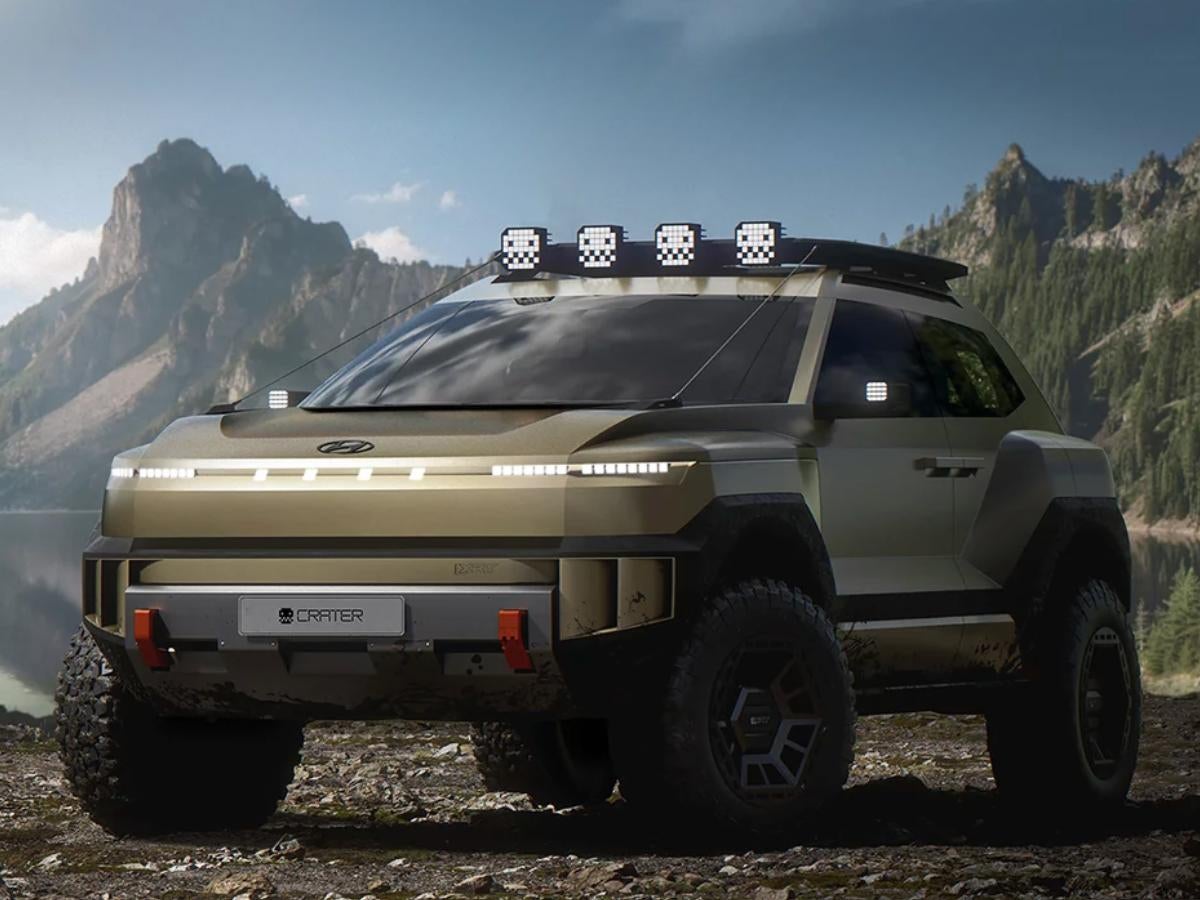
A front-angle view of the gold Hyundai CRATER Concept EV parked on a rocky shoreline. The vehicle features a rugged front skid plate with "CRATER" branding, orange tow hooks, massive all-terrain tires, and a roof rack equipped with four distinct pixelated square lights.

The international debut of the Hyundai CRATER Concept has fundamentally transformed our expectations for all-terrain performance within the compact electric SUV category. Initially revealed at the 2025 AutoMobility LA exhibition, this vehicle transcends the typical boundaries of a design study. It offers a high-voltage perspective on the rugged trajectory of the Hyundai XRT subbrand. Crafted at the Hyundai America Technical Center in California, this trailblazing concept draws its vision from the planet's most demanding environments to deliver a standard of toughness that recalibrates the industry. At Crain Hyundai of Little Rock, we are eager to showcase how this "Art of Steel" ideology will revolutionize the driving experience for residents in Little Rock, North Little Rock, and across Central Arkansas.

The inspiration behind the CRATER Concept stemmed from a deep exploration into the essence of automotive independence. The result is a dedicated electric explorer engineered to navigate everything from the winding trails of the Ouachita National Forest to the bustling corridors of West Little Rock. While the CRATER Concept remains a vision of what is to come, the engineering milestones and daring aesthetics it debuts are already influencing the next wave of Hyundai XRT models that will eventually arrive at our dealership.

What is the CRATER Concept?

The Hyundai CRATER Concept debuts the "Art of Steel" visual identity, a method that reimagines industrial utility as a form of high-end sculpture. Rather than utilizing the plastic cladding common on most SUVs to suggest ruggedness, the CRATER employs deep-draw steel panels to establish a commanding, geometric silhouette that appears precision-engineered for extreme environments.

Several pioneering features are making their first appearance on the CRATER:

  • The "Crater Man" Persona: Hyundai has added a human element to the machinery with a repeating mascot integrated into the gear-tooth door mechanisms and recovery anchors, merging physical utility with a distinct character.
  • Removable Utility Systems: The vehicle is equipped with modular components, such as side-mirror cameras that can be detached for use as powerful handheld torches and a portable wireless speaker housed in the center console for off-grid entertainment.
  • BYOD Ecosystem: Shifting away from fixed internal screens, the cockpit utilizes a Bring Your Own Device configuration that syncs your smartphone with an expansive, full-width head-up display for a personalized digital interface.

Key Features of the Hyundai CRATER Concept

The CRATER Concept was engineered for adventurers who believe the true journey begins where the pavement ends. Although it occupies a compact footprint similar to the IONIQ 5, the CRATER’s bold, wide-set stance and elevated ground clearance provide it with the undeniable authority of a heavy-duty trail specialist.

  • Extreme Proportions: The frame is characterized by aggressive approach and departure angles, enabling the vehicle to navigate sharp inclines and clear jagged obstacles without risking damage to the bodywork.
  • Dune Gold Matte Finish: The exterior is coated in a refined green-gold matte paint that mimics the organic tones of high-desert terrain, accented by vivid orange detailing.
  • Fractal Faceted Wheels: The 18-inch rims feature a design inspired by meteor impacts, fitted with massive 33-inch all-terrain tires for maximum traction and height.
  • Integrated Roof Deck: This high-strength gear carrier acts as a foundation for auxiliary trail lighting and storage, featuring steel limb risers designed to push low-hanging branches away from the windshield.

Next-Gen Safety

The security philosophy driving this electric off-roader emphasizes extreme structural integrity and total situational awareness. The cockpit is designed around a visible, high-strength roll structure that provides tangible safety while offering secure mounting points for adventure equipment and handholds during technical climbs.

This sophisticated safety strategy incorporates a digital information stream across the lower windshield, merging live video from external sensors to remove blind spots during technical maneuvers. Additionally, the presence of a specialized four-point safety harness confirms Hyundai’s commitment to keeping occupants firmly seated during intense off-road activity.

Advanced Technology

The CRATER Concept strikes a balance between its cutting-edge EV platform and a mechanical, intuitive interface that restores driver engagement.

  • Active HUD: A high-definition head-up display spans the base of the glass, functioning as a central data station for navigation, incline metrics, and critical EV performance data without forcing the driver to look away from the path.
  • 3D Parametric Pixel Lighting: Hyundai’s signature lighting design evolves into a three-dimensional form, found in the overhead auxiliary lamps and a recessed glowing panel on the dashboard that communicates with the driver.
  • Mechanical Terrain Controller: A textured, gear-driven dial is located at the heart of the dashboard, offering a tactile method for engaging locking differentials and adjusting traction modes instantly.

Spacious & Comfortable

The interior of the CRATER is engineered to resist the elements, featuring a layout that emphasizes longevity and physical feedback. Utilizing the Black Ember aesthetic, designers chose materials like Alcantara and heavy-duty leather capable of handling the dirt and grit of real-world exploration. Instead of standard flat seats, the interior features cylindrical bolsters modeled after premium camping gear to keep occupants stable over uneven terrain.

The primary console and dashboard are forged as a single unit of sculpted steel, creating a sturdy connection between the exterior’s power and the interior’s ergonomics. Hints of orange and topographic map etchings throughout the cabin serve as a constant tribute to the vehicle's adventurous heritage.

Trim Highlights & Available Options

This concept functions as a high-voltage roadmap for the future of Hyundai's XRT adventurous subbrand. It showcases several capabilities slated to define future production vehicles:

  • Advanced Terrain Selector: The flat-bottomed steering wheel includes quick-access toggles for Snow, Sand, Mud, and a specialized high-performance XRT setting.
  • Integrated Recovery Tools: The front bumper includes a recovery point that doubles as a utility tool, while the side-mounted cameras can be removed and repurposed as high-intensity LED flashlights.
  • Tactile Controls: Despite its digital heart, the cabin maintains physical switches for climate and driving modes, ensuring drivers can manage the vehicle by feel while staying focused on the trail.

Exploration Beyond Little Rock

The CRATER Concept is far more than a standard SUV. It’s a dedicated foundation for the "Impact of Adventure." From navigating the technical elevations of Pinnacle Mountain to traversing the scenic routes near Benton, this vehicle’s engineering is a perfect match for Central Arkansas. For those living in Conway, Bryant, and Sherwood, this SUV demonstrates that the future of Hyundai engineering is intrinsically linked to the diverse landscapes of our state.

Flexible Financing for Future Tech

At Crain Hyundai of Little Rock, we are dedicated to helping you access the newest innovations in the automotive world. Whether you’re browsing our current collection of award-winning electric vehicles, like the IONIQ 9, or you’re watching for the official debut of the CRATER, our finance experts are ready to help. We provide competitive interest rates and flexible loan terms designed to align with your lifestyle.

Crain Buys Cars

Are you thinking about moving into a vehicle with superior off-road potential? The Crain Buys Cars initiative makes the trade-in experience straightforward, transparent, and incredibly efficient. Receive a prompt cash valuation for your current car and apply that value toward any new or high-quality pre-owned Hyundai in our massive selection. We will purchase your vehicle even if you choose not to buy one from us.

Visit Crain Hyundai of Little Rock Today

While the CRATER Concept provides a window into the future, the passion for off-road discovery is available today at Crain Hyundai of Little Rock. Our specialists are eager to introduce you to the current XRT family and assist you in finding the perfect vehicle for your next Central Arkansas journey.

Frequently Asked Questions

How does the CRATER Concept differ from existing Hyundai SUVs? 
The CRATER is defined by its specialized off-road hardware, featuring 33-inch tires, detachable utility lights, and a mechanical-first control system that prioritizes physical interaction over touchscreens.

Is the CRATER Concept fully electric? 
Yes, the CRATER is a 100% battery-electric SUV utilizing a dual-motor system to deliver silent, high-torque power ideal for technical off-road environments.

When will the Hyundai CRATER Concept be available for purchase? 
The CRATER is currently a concept study. However, its "Art of Steel" design language and rugged XRT features are already being integrated into the development of future production models.
Posted in:

Related Posts

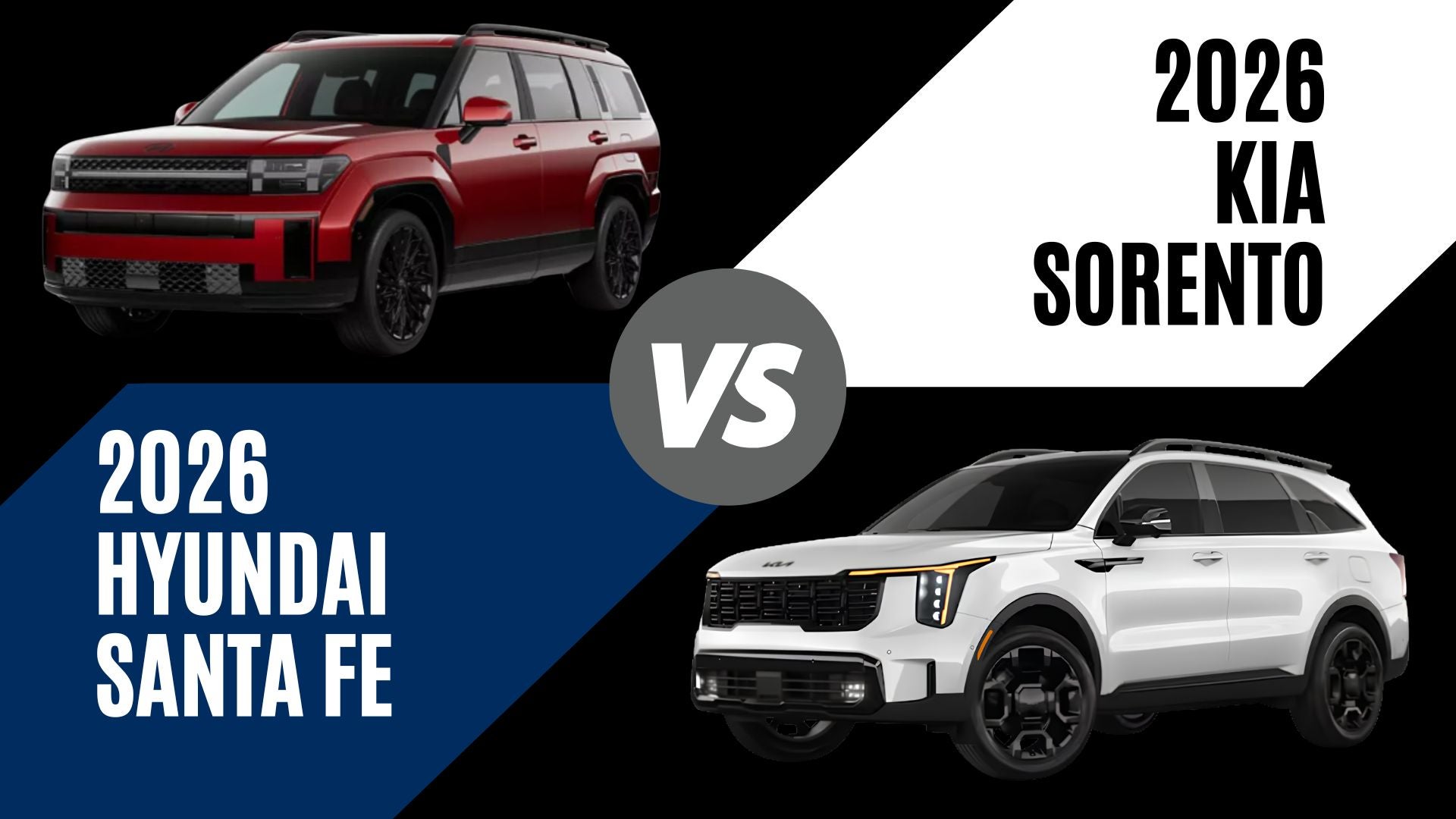
2026 Hyundai Santa Fe and 2026 Kia Sorento three-row SUVs shown together for Little Rock, Arkansas drivers

2026 Hyundai Santa Fe vs 2026 Kia Sorento: Comparing Two Three-Row SUVs for Little Rock Families

Shopping for a three-row SUV in Little Rock usually narrows down fast to a handful of real contenders, and the 2026 Hyundai Santa Fe and 2026 Kia Sorento both belong on that short list. Each seats up to seven, each is built to handle daily errands and road trips alike, and each brings enough standard equipment to make the decision harder than it should be. Rather than picking a winner outright, this comparison lays out where the two actually differ so Little Rock drivers can weigh what matters most to their own routine. Trim-level details for the Santa Fe are available on the 2026 Hyundai Santa Fe research page. Vehicle Comparison 2026 Hyundai Santa Fe Horsepower 277 hp (turbocharged 2.5L I4) AWD Availability Available Fuel Economy / Range 20/29 (FWD); 20/28 (AWD) mpg (city/hwy) Seating Capacity Up to 7 (6 with optional captain's chairs) Top Features Dual 12.3-in displays w/ UV-C tray Nappa leather trim options New 2026 8-speed automatic Towing Capacity 3,500 lbs (4,500 lbs on XRT) Find Your Santa Fe Today 2026 Kia Sorento Horsepower 191 hp standard/281 hp turbo (2.5L I4) AWD Availability Available Fuel Economy / Range 23/31 (base); 20/29 (turbo) mpg (city/hwy) Seating Capacity Up to 7 (6 with optional captain's chairs) Top Features Panoramic Dual-Screen Display Bose Premium Audio System Choice of Two Engine Outputs Towing Capacity 4,000 lbs (X-Pro trim) Search Our Used Inventory Exterior Presence and Cabin Feel Hyundai gave the Santa Fe a boxy, upright shape that looks far pricier than its window sticker suggests, complete with a wide tailgate opening and cabin materials borrowed from segments above it. Kia went a more familiar route with the Sorento, keeping traditional SUV proportions and adding ambient interior lighting plus stitched door panels that give the cabin a quietly upscale feel after dark. First Impressions: Santa Fe: architectural exterior lines with a cabin that feels a step above its price Sorento: classic SUV shape with warm ambient lighting inside Both: interior finishes that outperform their price bracket Powertrain and Everyday Driving Feel Every gas-powered Santa Fe runs a 277-hp turbocharged 2.5-liter four-cylinder, now backed by a redesigned eight-speed torque-converter automatic for 2026 that replaces the old dual-clutch unit. Kia gives Sorento buyers a choice: a 191-hp 2.5-liter four-cylinder or a stronger 281-hp turbocharged version, both routed through an eight-speed automatic. Drivers who tested the turbocharged Sorento noted confident handling and solid brake feel, though the throttle can feel slightly lazy off the line. The Santa Fe takes the opposite approach, tuning out road imperfections for a smoother, quieter cruise rather than chasing sharper cornering response. Driving Notes: Santa Fe: single strong engine built around comfort Sorento: two engine tiers, with the top option outmuscling the Santa Fe on paper Both: eight-speed automatics tuned for smooth daily driving Passenger and Cargo Room Seven-passenger seating is standard on both SUVs, and each offers an optional second-row captain's chair layout that trims capacity to six. The Santa Fe's third row comfortably fits kids and smaller adults, and Hyundai's 14.6 cubic feet of space behind that row translates to five carry-on suitcases in hands-on testing. Third-row space runs tighter in the Sorento for adult riders, and its cargo hold only managed two carry-on suitcases with all three rows in place. What the Sorento gives back is a genuinely well-detailed cabin, with thoughtful storage cubbies scattered throughout. Space Check: Santa Fe: notably more cargo room with the third row up Sorento: tighter back row, but a nicely finished interior Both: bench or captain's chair seating available in row two Santa Fe pulls ahead on real-world cargo capacity Infotainment and Driver Tech Two 12.3-inch screens anchor the Santa Fe's dashboard, joined by wireless Apple CarPlay and Android Auto, an optional dual wireless charging pad, and a UV-C sterilization tray for keeping phones and small items germ-free. Physical knobs for climate and volume stick around too, a detail that fits right in with the kind of everyday tech Hyundai builds into its lineup. Kia counters with a panoramic dual-screen layout that pairs a 4.3-inch or 12.3-inch gauge cluster, depending on trim, with a 12.3-inch touchscreen. Higher trims add a 12-speaker Bose sound system, an available wireless charging pad, and an optional rear-seat entertainment system for longer drives. Tech Rundown: Santa Fe: dual 12.3-inch displays and a UV-C sanitizing compartment Sorento: panoramic dual-screen setup with available rear entertainment Both: standard wireless smartphone connectivity Driver-Assistance and Safety Tech Standard safety equipment runs deep on both vehicles. The Santa Fe includes forward-collision warning with automated emergency braking, adaptive cruise control with stop-and-go functionality, and lane-keeping assist across every trim. Kia matches that depth in the Sorento, with standard automated emergency braking that adds pedestrian and cyclist detection, standard lane-keeping assist, and available adaptive cruise with lane centering. Hyundai's recent safety honors reflect the kind of protection built into the Santa Fe lineup. Safety Snapshot: Santa Fe: stop-and-go adaptive cruise standard across the range Sorento: pedestrian and cyclist detection folded into standard automated braking Both: standard automated emergency braking and lane-keeping assist Horsepower, Efficiency, and All-Wheel Drive Front-wheel drive comes standard on the Santa Fe, with all-wheel drive available on the 277-hp turbocharged model. EPA estimates 20 mpg in the city and 29 mpg on the highway for front-wheel-drive models, dropping to 20 mpg city and 28 mpg highway with all-wheel drive. Towing tops out at 3,500 pounds with trailer brakes, or 4,500 pounds on the XRT trim. Kia also offers front- or all-wheel drive on the Sorento. The base 191-hp engine earns 23 mpg city and 31 mpg highway, while the 281-hp turbo drops to 20 mpg city and 29 mpg highway. Towing maxes out at 4,000 pounds on the X-Pro trim. Fuel economy leans slightly toward the Sorento's base engine, while towing capacity favors the Santa Fe. Hybrid and Plug-In Alternatives Every figure above reflects the gas-only versions of both SUVs, with no hybrid or plug-in numbers folded in. That said, Little Rock drivers cross-shopping these two should know electrified versions exist for both nameplates. Hyundai builds a Santa Fe Hybrid, while Kia offers the Sorento in both Hybrid and Plug-In Hybrid form for buyers wanting stronger efficiency or the ability to run short trips on electric power alone. Hyundai's electrified lineup has earned real recognition lately, including a recent nod from Cars.com, and the Santa Fe Hybrid carries that same efficiency-focused engineering. Anyone curious how it compares to the standard model can ask the team at Crain Hyundai of Little Rock for a side-by-side look. Warranty and Long-Term Ownership Hyundai and Kia both back their vehicles with a five-year, 60,000-mile limited warranty and a ten-year, 100,000-mile powertrain warranty, coverage that ranks near the top of the industry. Hyundai separates itself with complimentary scheduled maintenance for three years or 36,000 miles, a perk Kia doesn't currently extend to Sorento buyers. Little Rock shoppers can dig into the specifics on Hyundai's warranty coverage before making a final call. Warranty Wrap-Up: Santa Fe: same core coverage, plus included maintenance Sorento: matching warranty terms, maintenance not included Both: five-year limited and ten-year powertrain protection Santa Fe's complimentary maintenance sets it apart long-term Final Verdict for Little Rock Drivers Both the 2026 Santa Fe and 2026 Sorento hold their own as well-rounded three-row SUVs, and either would fit comfortably into daily life around Little Rock. The Santa Fe's edge shows up in cargo space, its refreshed 2026 transmission, and complimentary maintenance that adds up over years of ownership. The Sorento answers back with a broader engine lineup and interior detailing that punches above its price. Little Rock drivers weighing both can stop by Crain Hyundai of Little Rock to compare trims, run the numbers, and see current inventory in person. FAQs Which SUV offers a stronger towing option, the Santa Fe or the Sorento? The Santa Fe's XRT trim tops out at 4,500 pounds of towing capacity, ahead of the Sorento's 4,000-pound maximum on its X-Pro trim. Does the Sorento's screen setup differ much from the Santa Fe's? Yes, the Sorento uses a curved panoramic dual-screen display, while the Santa Fe pairs two separate 12.3-inch screens for its gauge cluster and touchscreen. Is there more than one engine option available on these SUVs? The Sorento gives buyers a choice between two engine outputs, while the Santa Fe's turbocharged four-cylinder is standard across every non-hybrid trim.

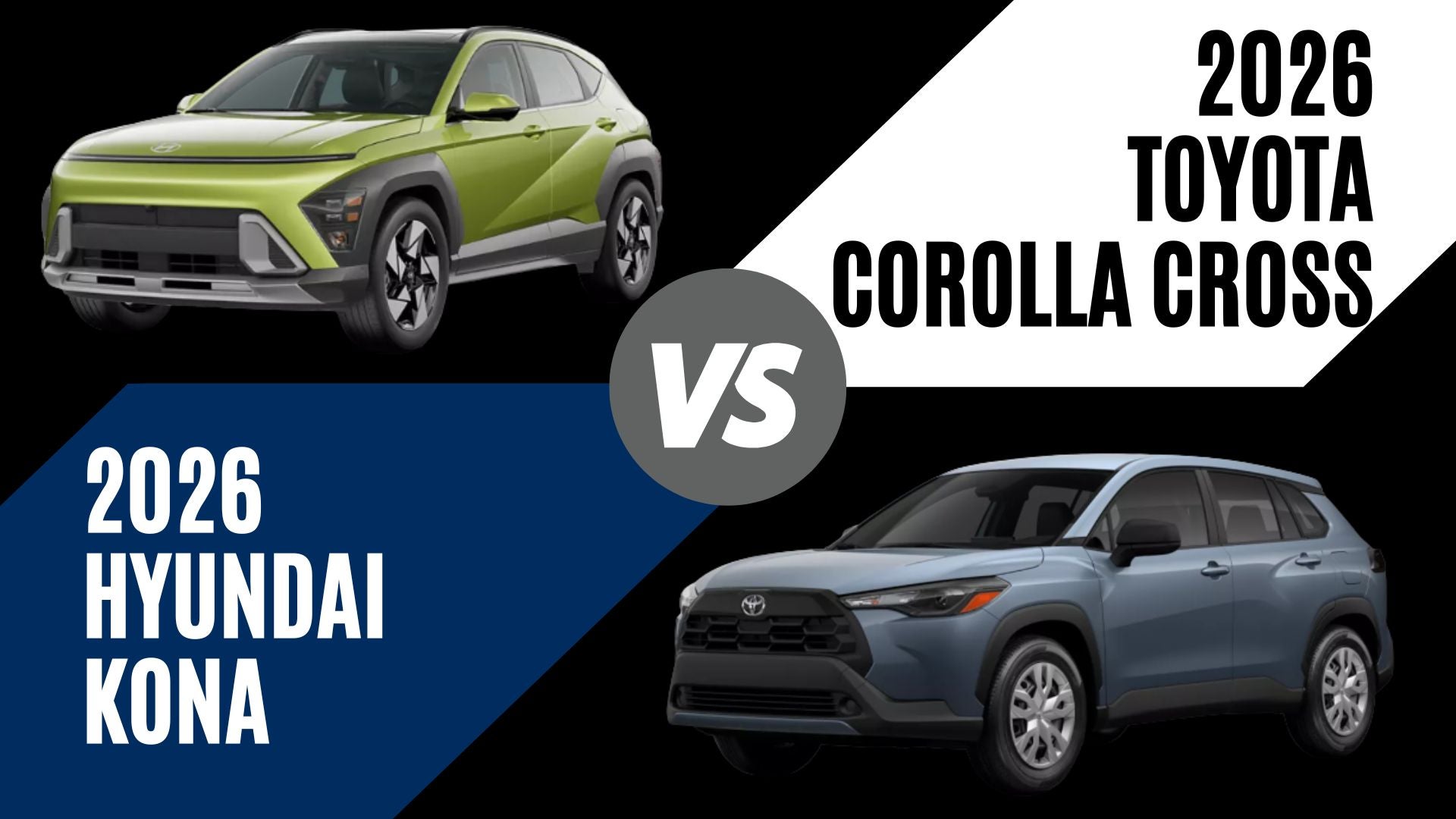
2026 Hyundai Kona and 2026 Toyota Corolla Cross subcompact SUVs compared side by side for Little Rock, Arkansas drivers

2026 Hyundai Kona vs 2026 Toyota Corolla Cross: A Value SUV Comparison for Little Rock Drivers

When Little Rock shoppers start narrowing down affordable subcompact SUVs, the 2026 Hyundai Kona and 2026 Toyota Corolla Cross tend to be the two names that keep coming up. Neither one asks for a big budget, and both deliver genuine SUV practicality in a smaller footprint. The differences show up once you start comparing what's actually included. Visit our model research page for full details on all 2026 Hyundai models. This comparison covers the gas-powered Corolla Cross only. A Corolla Cross Hybrid is also available from Toyota, but it isn't reflected in the specs or chart data below. Vehicle Comparison 2026 Hyundai Kona Horsepower 147 hp AWD Availability Available Fuel Economy / Range 29/34 mpg (city/hwy) Seating Capacity 5 Top Features 12.3" Touchscreen w/ Wireless CarPlay & Android Auto Standard Stop-and-Go Adaptive Cruise Control Standard Blind-Spot Monitoring Find Your Kona Today 2026 Toyota Corolla Cross Horsepower 169 hp AWD Availability Available Fuel Economy / Range 31/33 mpg (city/hwy) Seating Capacity 5 Top Features Standard CarPlay, Android Auto & SiriusXM Standard Adaptive Cruise Control; Standard Lane-Departure Warning w/ Accident Avoidance Search Our Used Inventory Look and Design Bold and angular, the Kona's second-generation redesign stands out in a class full of forgettable shapes, especially in striking color options like Neoteric Yellow or Soultronic Orange. Toyota kept things familiar with the Corolla Cross, carrying over the dependable, understated look drivers already associate with the Corolla nameplate. First Look: Kona: distinctive, eye-catching design language Corolla Cross: familiar Corolla styling in SUV form Both: compact proportions built for easy parking and daily errands Engine and Driving Feel A single 169-hp 2.0-liter four-cylinder and CVT combination powers every gas Corolla Cross, with front-wheel drive standard and all-wheel drive available. Around town, it gets the job done, though harder acceleration brings out some coarseness, and 60 mph arrives in 9.2 seconds with all-wheel drive. Hyundai gives Kona buyers more to choose from: a 147-hp base engine, or an optional 190-hp turbocharged 1.6-liter paired with a smooth eight-speed automatic. All-wheel drive is available across the full Kona lineup, and the turbocharged version reaches 60 mph in a considerably faster 7.5 seconds. Power Notes: Kona: optional turbo engine adds real everyday capability Corolla Cross: single powertrain that's adequate but unremarkable Kona's turbo option delivers a noticeably quicker, more confident drive Space for People and Cargo Little Rock families comparing these two will find usable room in either. The Kona's second row is comfortable for adults, and its cargo area fits seven carry-on suitcases behind the rear seats, growing to 20 with them folded flat. The Corolla Cross shares its interior layout with the Corolla sedan and hatchback, though the XLE trim upgrades it with faux-leather seating, heated front seats, and a fold-down rear armrest. Cargo capacity comes in at 24 cubic feet, with testing showing room for seven suitcases behind the second row and 19 with the seats down. Space Summary: Kona: 20 suitcases with seats folded, plus available ventilated front seats Corolla Cross: larger 24-cubic-foot cargo hold, with 19 suitcases folded Both: comfortable five-passenger seating built for real daily use Screens, Apps, and Connectivity Standard on every Kona is a 12.3-inch touchscreen with wireless Apple CarPlay and Android Auto, backed by a digital gauge cluster that expands to 12.3 inches on SEL Premium and Limited trims. Hyundai adds even more convenience with Digital Key 2, which lets a paired smartphone unlock and start the vehicle. The Corolla Cross starts with an 8-inch touchscreen, stepping up to a new 10.5-inch display on the 2026 XLE trim. Apple CarPlay, Android Auto, and SiriusXM come standard, along with a six-speaker stereo, though the source material doesn't specify wireless connectivity the way it does for the Kona. Connectivity Corner: Kona: standard wireless smartphone connectivity, plus Digital Key convenience Corolla Cross: smaller base screen, with the larger display reserved for the top trim Kona provides more consistent tech regardless of which trim you choose Driver-Assistance Technology Safety tech runs deep on both vehicles, though the Kona edges ahead in a few areas. Every Kona includes standard stop-and-go adaptive cruise control, lane-centering assist, and blind-spot monitoring, in addition to forward-collision warning and automated emergency braking. The Corolla Cross brings its own strong standard package: automated emergency braking with pedestrian detection, lane-departure warning with accident avoidance, adaptive cruise control, and road sign assist. Little Rock drivers can see how Hyundai's safety reputation holds up in the brand's recent industry recognition. Safety Snapshot: Kona: standard blind-spot monitoring across every trim Corolla Cross: standard road sign assist and accident avoidance system Both: standard adaptive cruise control and automated emergency braking Fuel Economy, AWD, and Power Base Kona models return up to an EPA-estimated 29 mpg city and 34 mpg highway, while the turbocharged, all-wheel-drive version comes in at 25 mpg city and 28 mpg highway, with real-world highway testing reaching 31 mpg. Hyundai does not recommend towing with the Kona. The Corolla Cross earns an EPA-estimated 31 mpg city and 33 mpg highway with front-wheel drive, dropping slightly to 29 mpg city and 31 mpg highway with all-wheel drive. The Corolla Cross holds a small efficiency edge in base form, but the Kona's optional turbo engine offers real extra capability for drivers who want more than adequate power. Hybrid and Electric Alternatives The figures throughout this comparison reflect the gas-only Corolla Cross, so no hybrid numbers are mixed in. A Corolla Cross Hybrid is available separately from Toyota. For 2026, the Kona is sold exclusively as a gas-powered SUV. A previous generation was offered as the Kona Electric, and that version may still be available at select locations. Drivers interested in Hyundai's broader hybrid and EV lineup can see the brand's latest industry standing for a fuller picture of what's available. Warranty and Maintenance Coverage Hyundai's coverage on the Kona includes a five-year, 60,000-mile limited warranty, a ten-year, 100,000-mile powertrain warranty, and three years or 36,000 miles of complimentary scheduled maintenance. Toyota's Corolla Cross warranty falls short of that by comparison: a three-year, 36,000-mile limited warranty, a five-year, 60,000-mile powertrain warranty, and two years or 25,000 miles of complimentary maintenance. Little Rock buyers can review the full breakdown in Hyundai's warranty coverage, also known as America’s Best Warranty. Warranty at a Glance: Kona: doubles the Corolla Cross's powertrain coverage Corolla Cross: shorter limited and powertrain terms, with less included maintenance Kona offers a clear, decisive advantage for drivers who put on higher mileage The Verdict for Little Rock Drivers Both the Kona and Corolla Cross bring real value to the subcompact SUV class, but the Kona pulls ahead on the things that matter most over time: a stronger optional engine, more consistent tech across trims, deeper standard safety equipment, and warranty coverage that isn't close. Little Rock drivers who want more capability and stronger long-term protection without paying more upfront should make the Kona their first stop. Visit Crain Hyundai of Little Rock to see current inventory and financing options in person. FAQs Which SUV offers more cargo room, the Kona or the Corolla Cross? The Corolla Cross has a slightly larger 24-cubic-foot cargo hold, though the Kona fits more suitcases with the rear seats folded, at 20 compared to the Corolla Cross's 19. Does the Corolla Cross come with a larger touchscreen than the Kona? Only on its top trim. The Corolla Cross's XLE gets a 10.5-inch display for 2026, while the Kona includes a 12.3-inch touchscreen standard across every trim. Is a hybrid version available for the Kona or the Corolla Cross this year? The Corolla Cross is available as a hybrid separately from the gas model, while the Kona is offered exclusively with a gas powertrain for 2026.

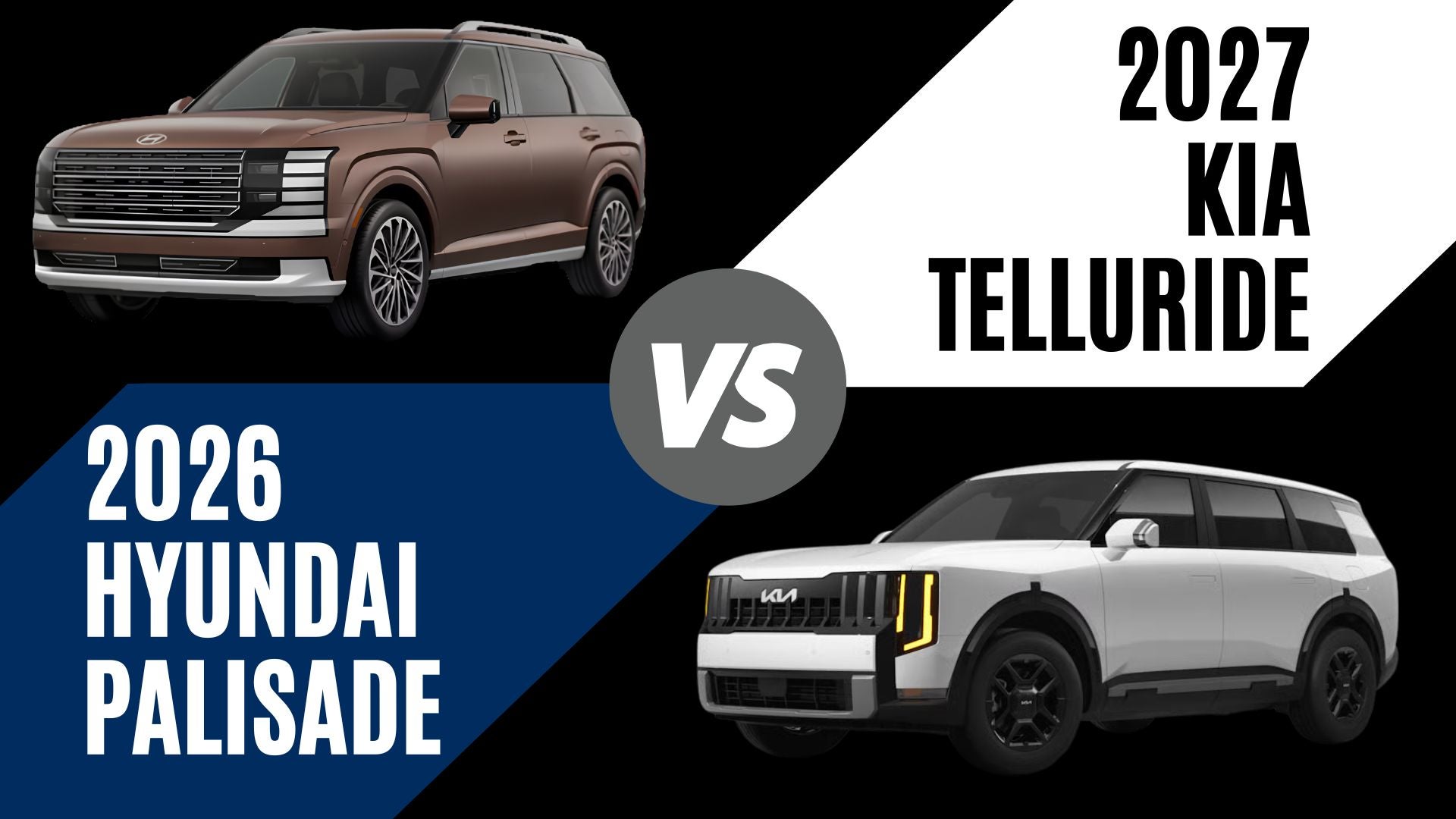
2026 Hyundai Palisade and 2027 Kia Telluride three-row SUVs compared side by side for families in Little Rock, Arkansas

2026 Hyundai Palisade vs 2027 Kia Telluride in Little Rock, AR

Power, Capability, and Long-Term Value Central Arkansas families cross-shopping a three-row SUV usually land on the same short list, and the 2026 Hyundai Palisade and 2027 Kia Telluride both make the cut for good reason. Where they split is in what each one prioritizes: the Palisade puts its strongest effort into power output and ownership coverage, while the Telluride banks on rugged versatility. One interesting fact worth noting is that Kia never released a 2026 Telluride. The redesign jumped straight from the outgoing 2025 model to a 2027, so despite arriving in showrooms around the same time as the Palisade, the Telluride is technically the newer of the two by model year. Vehicle Comparison 2026 Hyundai Palisade Horsepower 287 hp AWD Availability Available Fuel Economy / Range 20-21 combined mpg (city/hwy) Seating Capacity 7-8 Top Features Dual 12.3″ Curved Displays Available Relaxation Seats UV-C Sanitizing Tray Towing Capacity Up to 5,000 lbs Find Your Palisade Today 2027 Kia Telluride Horsepower 274 hp AWD Availability Available Fuel Economy / Range 20-22 combined mpg (city/hwy) Seating Capacity 7-8 Top Features Built-In AI Voice Assistant Dual Wireless Phone Chargers Available X-Pro Off-Road Hardware Towing Capacity Up to 5,000 lbs Search Our Used Inventory Two Distinct Design Directions Redesigned lighting and a cleaner silhouette give the Palisade a genuinely upscale presence this year, moving it further from the outgoing model's boxier look and closer to what buyers expect from a luxury three-row. Kia didn't chase that same shift with the Telluride. The redesigned model keeps the brand's signature toughness intact, boxy proportions, an upright nose, and exterior details that lean into capability rather than polish. First Look: Palisade: Upscale, refined styling following its 2026 redesign Telluride: Rugged, capability-focused design carried into its 2027 redesign Both: Seating for seven or eight passengers Power That Backs Up the Look Numbers alone don't tell the full story here, but they're a good place to start. 287 horsepower comes standard in every Palisade, the highest output in this matchup, and Hyundai's V6 delivers it in a smooth, linear way that never feels like it's working hard even when towing or merging with a full load of passengers. Kia's 274-hp turbocharged four-cylinder trails by 13 horsepower on paper, but the turbo character shows up immediately off the line, quicker initial response than the Palisade's V6 offers, even if the top-end power gap tilts in Hyundai's favor. Both SUVs offer available all-wheel drive. Under the Hood: Palisade: 287-hp V6, the stronger output of the two Telluride: 274-hp turbocharged engine, quicker off the line Both: Available AWD for changing road conditions Cabin Comfort for Every Passenger A three-row SUV lives or dies on how it treats the people riding in it, not just the driver. Hyundai's answer is the available Relaxation Seats, a feature designed specifically for long-distance comfort rather than daily commute convenience. Add in premium materials and a dashboard that looks genuinely upscale, and the Palisade's cabin is elevated well above what its price tag suggests. Kia doesn't chase that same luxury angle with the Telluride. Instead, the focus stays on usable space, three genuinely roomy rows, and enough storage cutouts to keep gear organized on longer trips. Comfort Notes: Palisade: Available Relaxation Seats, premium cabin materials Telluride: Spacious three-row layout, practical storage throughout Both: Family-friendly cabins built for daily versatility Technology Built for Daily Life Neither SUV treats technology as an afterthought this generation. Hyundai wraps the Palisade's dashboard in dual 12.3-inch curved displays, a setup that reads as one continuous panel rather than two separate screens bolted together. Hyundai Digital Key rounds things out, letting owners leave the physical fob at home entirely if they choose. Kia pairs a 12.3-inch touchscreen and available digital gauge cluster in the Telluride with a built-in AI assistant that takes a more conversational approach, responding to natural voice commands instead of requiring drivers to navigate through menus. Tech Rundown: Palisade: Dual 12.3-inch curved displays, Hyundai Digital Key convenience Telluride: 12.3-inch touchscreen, built-in AI voice assistant Both: Standard wireless smartphone connectivity Safety Systems Built for Confidence A full load of passengers raises the stakes on safety technology, and both automakers know it. Hyundai SmartSense covers the Palisade's active safety needs, adaptive cruise, lane-keeping, blind-spot monitoring, and automatic braking, all included. Highway Driving Assist 2 goes a step further, easing the mental load on longer highway stretches specifically. Kia's answer on the Telluride covers similar ground, a full suite of driver-assistance tech that holds up whether the drive is a school pickup line or a five-hour trip to visit family. Safety Snapshot: Palisade: Hyundai SmartSense and Highway Driving Assist 2 Telluride: Comprehensive driver-assistance features across trims Both: Advanced safety systems built for family transportation Towing and Fuel Economy Neither of these SUVs sacrifices capability for comfort. Fuel economy runs close, 20 to 21 mpg combined for the Palisade against 20 to 22 mpg combined for the Telluride, close enough that it shouldn't be the deciding factor for most shoppers. Towing tells a different story of parity: both SUVs handle up to 5,000 lbs when properly equipped, enough for a mid-size camper, a boat, or a loaded utility trailer. Capability Notes: Palisade: 20–21 mpg combined, up to 5,000 lbs towing Telluride: 20–22 mpg combined, up to 5,000 lbs towing Both: Available AWD and strong towing capability Electrified Options Worth Knowing About Gas power is the focus of this comparison, but it isn't the only option on the table anymore. A hybrid Palisade joined the lineup alongside the redesign. Kia has since added its own hybrid Telluride variants for shoppers who want three-row space without the fuel bill that usually comes with it. Electrified Notes: Palisade: Available hybrid powertrain Telluride: Available hybrid powertrain Both: Added efficiency without giving up three-row practicality The Real Cost of Ownership Sticker price is only the start of what a three-row SUV actually costs to own. Warranty coverage is where Hyundai separates itself, and the Palisade benefits from that same industry-leading protection the brand is known for. America’s Best Warranty is the kind of coverage that keeps paying off well past the first few years. Kia's warranty on the Telluride holds its own against most competitors, but it doesn't quite reach the bar Hyundai has set, worth factoring in for anyone thinking long-term about total cost. Value Points: Palisade: Industry-leading Hyundai warranty coverage Telluride: Competitive warranty coverage within the segment Both: Backed by established manufacturer support Which Three-Row SUV Fits Your Family in Little Rock? There's no wrong answer between these two. Just different priorities. Buyers chasing the most horsepower, the plushest cabin, and the strongest warranty coverage will likely gravitate toward the Palisade. Buyers who want that rugged Kia character and don't mind trading a little top-end power for quicker off-the-line response may find the Telluride the better fit. Either way, families throughout Little Rock, North Little Rock, Conway, and Benton get a genuinely capable three-row SUV built for daily life in Central Arkansas. FAQs Q: How much horsepower separates the Palisade and Telluride? A: The Palisade's V6 produces 287 horsepower, 13 more than the Telluride's 274-hp turbocharged engine, though the Telluride feels quicker off the line despite the smaller number. Q: Is the Palisade or Telluride a better long-term investment? A: Hyundai's industry-leading warranty gives the Palisade a real edge for buyers planning to keep their SUV long-term, while the Telluride's coverage remains solid but doesn't match Hyundai's package. Q: Why does the Telluride skip straight to a 2027 model year? A: Kia never released a 2026 Telluride, moving directly from the outgoing model to a redesigned 2027 version, while Hyundai's Palisade redesign landed in the 2026 model year.