



Long-Term Value and Ownership Confidence in a Compact SUV
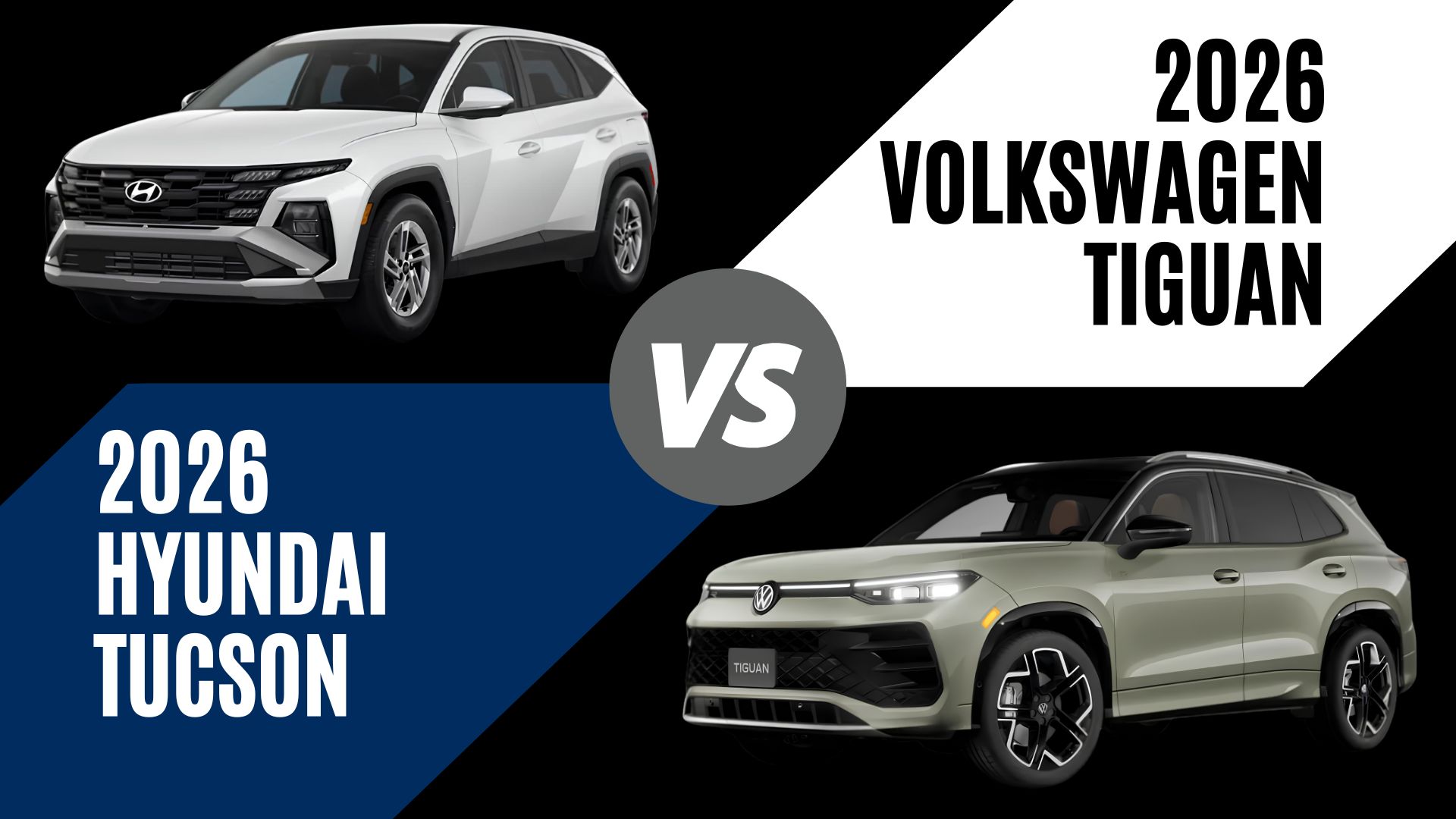
The 2026 Hyundai Tucson and 2026 Volkswagen Tiguan sit near the top of the compact SUV segment in Little Rock, AR, but they get there in different ways. One leans on long-term value and warranty coverage. The other brings European styling and, on its top trim, real horsepower.
Even though the Tucson also comes in Hybrid and Plug-In Hybrid forms, this comparison sticks to the gas-powered lineup only. Full trim details for the gas Tucson are covered on the 2026 Hyundai Tucson model research page.
Vehicle Comparison
2026 Hyundai Tucson
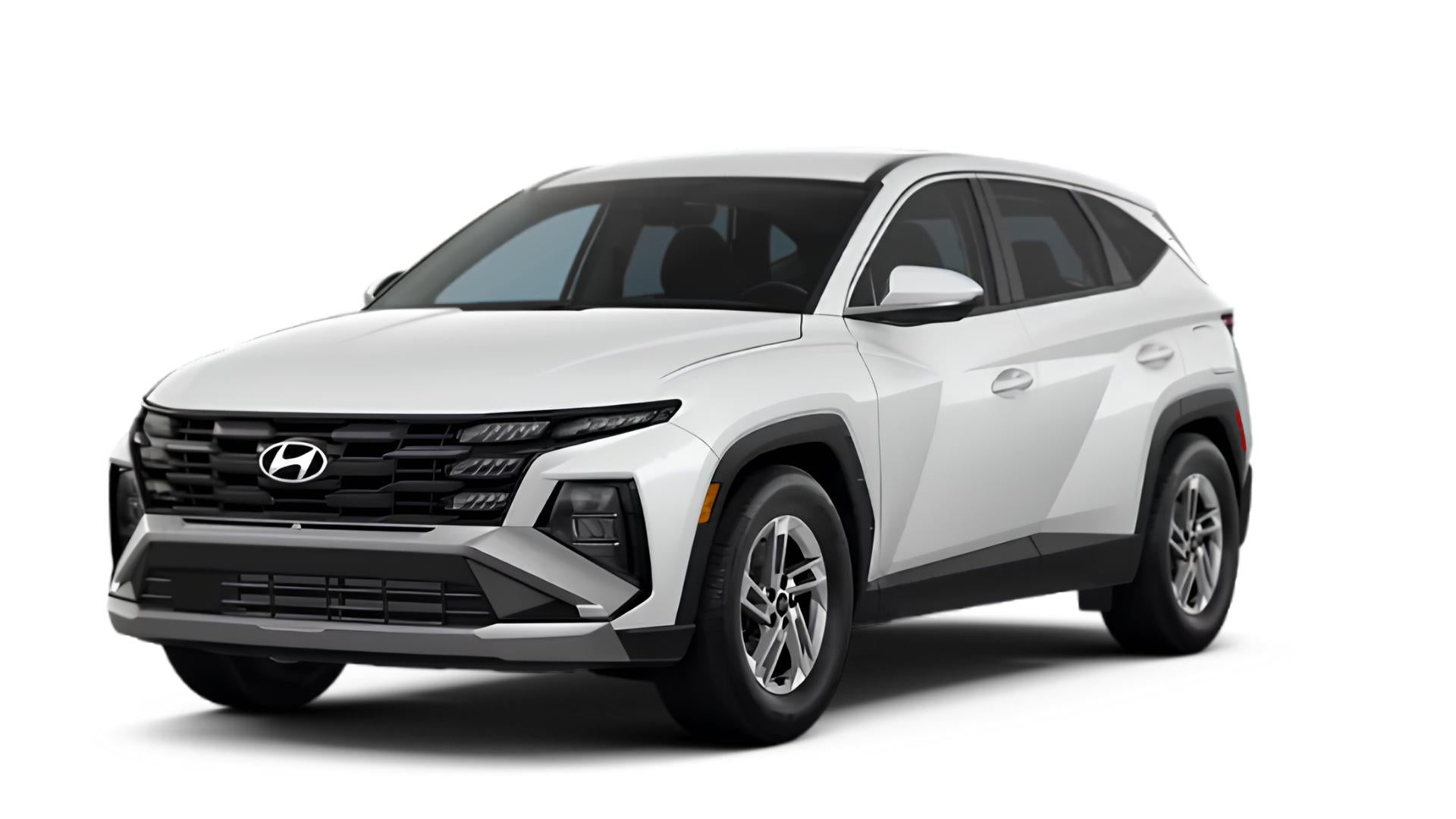
- 12.3-inch Touchscreen
- Hyundai Digital Key 2
- Hyundai SmartSense Safety Suite
2025 Volkswagen Tiguan
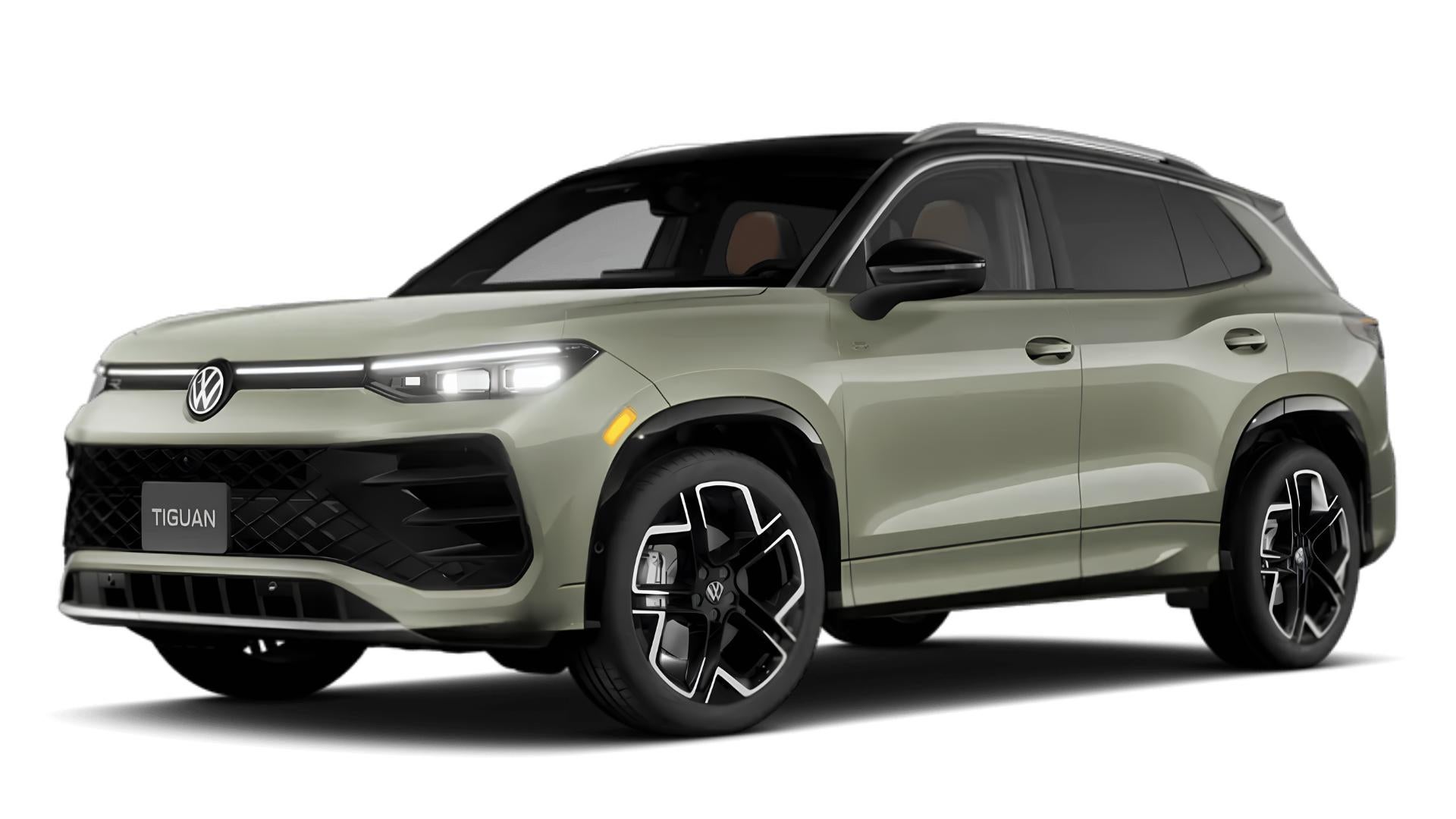
- 12.9-inch Touchscreen
- Standard Adaptive Cruise Control
- IQ.DRIVE Safety Suite
First Impressions Inside the Cabin
Physical buttons still handle climate control in the Tucson, laid out on a dedicated panel next to a column-mounted shifter and digital gauge display. The overall effect is a cabin that feels straightforward rather than flashy, built with quality materials arranged in a way that mirrors Hyundai’s broader lineup right now.
The Tiguan takes a different approach, borrowing more from European design conventions than American ones. A column shifter here does the same job as the Tucson’s, opening up console space, but the similarities end there once you look at materials. Leather and real wood trim are found on higher trims, a level of finish rare in this price range.
First Look:
- Tucson: Clean, no-frills dashboard built around physical controls
- Tiguan: European-inspired cabin with available leather and wood trim
- Both: Column-mounted shifters open up console storage
Everyday Technology
Screens keep getting bigger across this segment, but how they’re used matters just as much as their size.
The Tucson’s touchscreen starts at 12.3 inches across all trims, and moving up to SEL Premium or Limited adds a second 12.3-inch panel dedicated to digital gauges and navigation. Hyundai Digital Key shows up on those same higher trims, turning a compatible smartphone into a way to unlock, start, and share access to the vehicle.
Volkswagen goes bigger from the start. A 12.9-inch touchscreen comes standard on the Tiguan, with a 15-inch display available on higher trims running Digital Cockpit Pro. One detail carries over regardless of screen size: a physical rotary volume knob and drive-mode buttons, something touch-only interfaces tend to abandon.
Tech Rundown:
- Tucson: Standard 12.3-inch touchscreen, available digital gauge cluster with navigation, Digital Key convenience
- Tiguan: Standard 12.9-inch touchscreen, available 15-inch display, retained physical rotary controls
- Both: Wireless smartphone connectivity across the lineup
Power and Everyday Drivability
Horsepower tells one story here, but the driving experience tells another.
One engine covers the entire gas Tucson lineup, a 187-hp 2.5-liter four-cylinder paired with an eight-speed automatic and optional all-wheel drive. Getting to 60 mph takes about 8.8 seconds in testing, unhurried by most standards, but the payoff is a cabin that stays remarkably quiet and composed once cruising speed sets in.
The trim level determines the engine on the Tiguan side. Base S, SE, and SE R-Line Black models share a 201-hp turbocharged 2.0-liter four-cylinder, while the SEL R-Line Turbo, new for 2026, pulls 268 horsepower from that same engine, adds standard all-wheel drive, and drops the 0-60 time to 6.7 seconds.
Under the Hood:
- Tucson: 187-hp 2.5L four-cylinder across all gas trims, 8.8-second 0-60
- Tiguan: 201-hp base turbo, 268-hp SEL R-Line Turbo, 6.7-second 0-60 (top trim)
- Both: Available all-wheel drive
Room for Passengers and Cargo
Most buyers underestimate how much cargo space actually matters until they’re loading groceries, luggage, or gear on a regular basis.
Behind the Tucson’s back row, testing fit 9 carry-on suitcases, a number that climbs to 22 with the seatbacks folded flat, numbers that outpace a lot of the competition in this class.
A longer wheelbase on the redesigned Tiguan pays real dividends here too, fitting the same 9 suitcases behind the rear seats but stretching to 25 once folded down. The tradeoff: the previous generation’s optional third row didn’t survive the redesign.
Space Notes:
- Tucson: Spacious rear seat and cargo area, among the roomiest in its class
- Tiguan: Longer wheelbase adds real cargo flexibility with seats folded
- Both: Seating for five, no third-row option
Confidence Behind the Wheel
Neither of these SUVs treats driver-assistance technology as an afterthought.
Pedestrian-detecting automated emergency braking and lane-keeping assist are standard on every Tucson trim. In higher trims, Hyundai SmartSense unlocks adaptive cruise control with lane-centering, while Highway Driving Assist 2 takes some of the effort out of longer highway drives.
No trim-climbing required on the Tiguan side, adaptive cruise control with lane-centering comes standard across the board, alongside automated emergency braking and lane-keeping assist. Ten total airbags, including knee, center, and rear side coverage, back it all up.
Safety Snapshot:
- Tucson: Hyundai SmartSense and Highway Driving Assist 2 on select trims
- Tiguan: Standard adaptive cruise control across the lineup, 10 total airbags
- Both: Standard automated emergency braking and lane-keeping assist
Fuel Economy for Central Arkansas Commutes
A few miles per gallon adds up fast for anyone commuting daily through Little Rock, North Little Rock, Conway, or Benton.
The gas Tucson posts 25 mpg in the city and 33 mpg on the highway with front-wheel drive, for a combined 28 mpg. Opting for all-wheel drive brings those numbers down slightly, to 24 in the city, 30 on the highway, and 26 combined.
Base Tiguan trims with front-wheel drive rate even higher on paper. You’ll get 26 in the city and 34 on the highway. The 4Motion all-wheel-drive system pulls that back to 22 in the city and 30 on the highway. The high-output SEL R-Line Turbo sacrifices a bit more for its extra power, landing at 29 mpg on the highway.
Efficiency Notes:
- Tucson: 28 combined mpg (FWD), 26 combined mpg (AWD)
- Tiguan: Up to 26 city/34 highway mpg (FWD, base engine), 29 highway (SEL R-Line Turbo)
- Both: Competitive efficiency for the segment given their power output
A Note on the Tucson Hybrid and PHEV
For drivers who want more power without going all the way to a Tiguan, the Tucson lineup has an answer of its own. Both the Tucson Hybrid and Tucson Plug-In Hybrid outrun the standard gas engine off the line, and the electrified powertrains bring a fuel-economy bump along with them. Learn more about the Tucson Hybrid and Tucson PHEV on our model research page.
The Real Cost of Ownership
What happens after the warranty paperwork gets signed says a lot about the true cost of owning either of these SUVs.
Hyundai backs the Tucson with America’s Best Warranty, a 5-year/60,000-mile limited warranty, a 10-year/100,000-mile powertrain warranty, and 3 years or 36,000 miles of maintenance at no charge.
Volkswagen’s numbers come in lower across the board on the Tiguan. You’ll get a 4-year/50,000-mile limited and powertrain warranty, plus 2 years or 20,000 miles of complimentary maintenance. It’s respectable coverage, just not enough to catch up to what Hyundai offers.
Value Points:
- Tucson: 10-year/100,000-mile powertrain warranty, 3 years of complimentary maintenance
- Tiguan: 4-year/50,000-mile powertrain warranty, 2 years of complimentary maintenance
- Tucson holds a clear advantage on long-term coverage
Which Compact SUV Makes Sense for Little Rock Drivers?
No single spec decides this one, since both SUVs genuinely deliver in this segment.
Warranty strength and lower long-term costs point toward the Tucson for most drivers. The Tiguan pulls ahead for anyone chasing real performance, especially with the 268-hp SEL R-Line Turbo, or a cabin that feels more European than mainstream.
Drivers weighing other options can also see how the Tucson stacks up against the Honda CR-V or the Toyota RAV4. Either way, drivers throughout Little Rock, North Little Rock, Conway, and Benton get a genuinely well-equipped compact SUV built for daily life in Central Arkansas.
FAQs
Q: Does the Tucson or Tiguan hold up better for a driver who keeps a vehicle a long time?
A: The Tucson is built with long-term ownership in mind, backed by a 10-year/100,000-mile powertrain warranty and 3 years of complimentary maintenance, both well ahead of what the Tiguan offers.
Q: If I want the fastest version of either SUV, which should I look at?
A: The Tiguan’s SEL R-Line Turbo is the quicker of the two, reaching 60 mph in 6.7 seconds thanks to its 268-hp engine. The gas Tucson tops out at 187 hp across every trim, with quicker acceleration only available through the Hybrid or Plug-In Hybrid.
Q: Does Volkswagen include free maintenance with a new Tiguan?
A: Yes, Volkswagen covers 2 years or 20,000 miles of complimentary maintenance on the Tiguan, compared to 3 years or 36,000 miles that Hyundai includes with the Tucson.
Connect with us


Recent Blog Entries
- 2026 Hyundai Palisade vs 2027 Kia Telluride in Little Rock, AR
- 2026 Hyundai Tucson vs Volkswagen Tiguan in Little Rock, AR
- Hyundai’s 2026 Report Card from Cars.com Is Better Than Most Brands Get
- Hyundai Sweeps 2026 IIHS Safety Awards: What It Means for Little Rock Drivers
- 2026 Hyundai Ioniq 5 vs Tesla Model Y in Little Rock, AR
Categories
Crain Hyundai of Little Rock

Address
11715 Colonel Glenn Rd
Little Rock, AR 72210
Phone
- Main 501-438-0582
| Monday | 9:00AM - 7:00PM |
| Tuesday | 9:00AM - 7:00PM |
| Wednesday | 9:00AM - 7:00PM |
| Thursday | 9:00AM - 7:00PM |
| Friday | 9:00AM - 7:00PM |
| Saturday | 9:00AM - 7:00PM |
| Sunday | Closed |
| Monday | 7:00AM - 6:00PM |
| Tuesday | 7:00AM - 6:00PM |
| Wednesday | 7:00AM - 6:00PM |
| Thursday | 7:00AM - 6:00PM |
| Friday | 7:00AM - 6:00PM |
| Saturday | 7:00AM - 3:00PM |
| Sunday | Closed |
| Monday | 7:00AM - 6:00PM |
| Tuesday | 7:00AM - 6:00PM |
| Wednesday | 7:00AM - 6:00PM |
| Thursday | 7:00AM - 6:00PM |
| Friday | 7:00AM - 6:00PM |
| Saturday | 7:00AM - 3:00PM |
| Sunday | Closed |
